
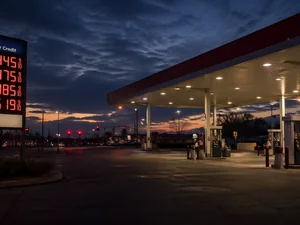
$4 Gas Is Starting to Change How Americans Spend Their Weekends
By Alex Morgan. Apr 15, 2026
The Price at the Pump Is Just the Beginning
It started at the gas pump. But it didn’t stop there.
Since the United States and Israel began military operations against Iran on February 28, gas prices have surged more than 30 percent, pushing past $4 a gallon according to AAA. For millions of Americans, the pain isn’t just financial – it is reshaping how they eat, how they travel, and whether they show up at all.
The war, now over seven weeks old, has become an invisible tax on everyday American life in ways that go far beyond the fuel gauge.
The Fun Economy Is Taking a Hit
Robert Evans doesn’t need to watch the news to track the conflict’s economic ripple. He just checks his cycling race registration numbers.
“Every time something major is announced – tariffs, an attack on another country – our event registration tracks like the stock market,” Evans, CEO of Cycling Quests, told CNBC. “People pull back for a minute and take a wait-and-see attitude.” He says that wait-and-see posture is firmly in place now. Some events are down 20 to 30 percent. Higher-priced events are starting to feel it too.
The data backs him up. Visits to what the industry calls “eatertainment” venues – escape rooms, bowling alleys, arcades – have declined on a year-over-year basis consistently since mid-February, according to foot traffic analytics firm Placer.ai. Dave and Buster’s has seen its stock reflect the same trend.
“As long as there is geopolitical chaos, there will be chaos in the fun economy,” Evans said. “People hesitate on whether they should save their money or enjoy life as normal. It’s unpredictable.”
Small Businesses Are Caught in the Middle
The ripple cuts deepest for small business owners who cannot absorb the fuel surcharges the way major carriers can.
Nick Friedman, co-founder of College Hunks Hauling Junk and Moving – a Tampa-based franchise operation with more than 2,000 trucks – says fuel costs have doubled as a percentage of revenue since the war began, jumping from a typical 3 to 5 percent all the way to 6 to 10 percent. He does not feel he can raise prices to compensate. “I don’t know that we have that luxury,” Friedman told CNBC. “Customers can choose to trade down.”
Amazon and JetBlue have already added surcharges to offset surging diesel and jet fuel costs. For a moving company competing at the local level, that option doesn’t exist. “It’s pinching everyone,” Friedman said. The franchise’s 200-plus locations are each absorbing a hit that was not in any 2026 business plan.
The Mixed Signals in the Spending Data
The picture is not uniformly bleak – but the bright spots are narrow.
Debit and credit card spending climbed in March, its largest increase in more than three years according to Bank of America data. But the driving force was a 16.5 percent jump in spending at gas stations themselves. Strip that out, and the picture is far more modest. IRS refunds are running more than 11 percent above prior year due to recent tax changes, providing some cushion – but for many households, that buffer is being absorbed directly at the pump.
The CNBC All-America Economic Survey, released Thursday, found that a majority of Americans say they have already cut spending because of gas prices, and that most expect the elevated costs to last at least six months.
What Washington Is Saying
President Trump, speaking Thursday, acknowledged the pain but offered no timeline. “Americans should anticipate paying higher prices for a little while,” he said, without specifying when relief would come.
Trump has insisted the U.S. maintains control of the Strait of Hormuz and that the financial pressure on Iran is exactly the point. “They came to us and said, ‘We will agree to open the strait,’” he said. “I’m the one that kept it closed.” Brent crude closed Thursday at $105.07 per barrel – up roughly $33 from the day before the war started.
A Nation Watching and Waiting
The war’s human cost in the Middle East remains the dominant story. But at kitchen tables across America, a parallel calculation is happening every week – whether to fill the tank before the weekend trip, whether to book the escape room for the birthday party, whether to skip the dinner reservation and just stay home.
According to a Brown University research tracker launched this week, American consumers have absorbed more than $24 billion in additional fuel costs since February 28. Summer driving season has not yet begun.
The fun economy will likely recover. But for now, the math at the pump is winning.
References: iran war gas prices consumer spending economy | us iran war gas prices diesel jet fuel economy consumer tax | trump iran war gas prices strait of hormuz

The Topline News team was assisted by generative AI technology in creating this content
Trending

Earn Massive Cash Back With This Card
Sponsored

Body Parts Found in 2 Minnesota Lakes in 1993 Finally Identified
Taylor Bennett

The Dumb Money Mistake Most People Make
Sponsored

Cold Case Investigator Says Marilyn Monroe's Death Scene Was 'Too Pristine'
Jordan Reyes

These 14 Benefits Could Save Seniors Thousands
Sponsored

Alex Murdaugh's Murder Convictions Are Gone - He Is Still in Prison
Jordan Reyes

James Harden Pulled Over at 3 A.M., Booked by Dawn
Taylor Bennett
They Planned Drone Bombs Over the Crowd. A Teenager's Mother Called the FBI.
Dana Whitfield

Actor From 'Top Gun: Maverick' Killed at Home - Arrest Made
Taylor Bennett

Mom's Birthday Text Came Hours Before Daughter Killed Her
Jordan Reyes

Teens Paid to Shoot and Film It. A Veteran Cop Was Killed Trying to Stop Them.
Jordan Reyes

Nicole Brown Simpson Said 'I'd Rather Die' - Her Ex Finally Speaks
Dana Whitfield

Actor From 'Elf' and 'Friday' Arrested After Missing Child Support Hearing
Jordan Reyes

Psychotherapist, New Mom, Stabbed to Death at Home
Dana Whitfield

'Get Him Out of Here' - Judge Orders Gilgo Beach Killer Removed After Families Speak
Alex Morgan

Jury Rejects Self-Defense, Sends Teen to Prison 35 Years for Track Meet Killing
Taylor Bennett

Pastor Dies Hours Before Facing Wife's Murder Charge
Jordan Reyes

Missing Royal Caribbean Crew Member Found Dead in St. Kitts
Dana Whitfield

Georgia Couple Arrested for Murder After Bartender Found Dismembered in Reservoir
Dana Whitfield

Husband Sentenced to Life in Au Pair Murder Case
Taylor Bennett

Three Women Charged in Daylight Murder of Young Mom
Alex Morgan

IRS Agent Gets Life in Prison After Double Murder Plot With Family's Nanny
Alex Morgan

Mark Sanchez Stabbed 4 Times - Now Faces Prison
Alex Morgan

Mail Carrier Killed Months After Losing Her Husband
Taylor Bennett