
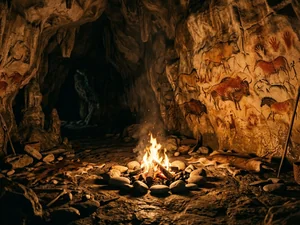
Scientists Reconstructed a 100000 Year Old Neanderthal Community
By Jordan Reyes. Apr 15, 2026
A Window Into a World 100,000 Years Old
In what researchers are calling one of the clearest genetic snapshots ever obtained of early human relatives, scientists have reconstructed an actual Neanderthal community – identifying individuals who lived together, their familial relationships, and how they organized their lives – using ancient DNA recovered from remains found in what is now Poland.
The findings, announced on April 22, 2026, offer something that has previously eluded researchers: not just data about Neanderthals as a species, but a portrait of a specific group of them, living together in a specific place and time, roughly 100,000 years ago.
How DNA Tells a Family Story
Neanderthal DNA has been studied for years, but the resolution of genetic analysis has improved dramatically. The new research identified multiple individuals from the same site whose genetic material shared clear markers of relatedness – meaning these were not random representatives of a population, but actual members of a community who likely knew each other, lived alongside each other, and may have cared for each other.
Researchers described the community structure as surprisingly coherent. The genetic ties revealed extended family relationships, suggesting Neanderthal groups were organized around kinship in ways that parallel how modern humans structure communities. The finding challenges older assumptions that Neanderthals lived in isolated, loosely connected bands with minimal social structure.
What Made This Discovery Possible
The quality of the ancient DNA recovered from these Polish remains was exceptional – well-preserved enough to allow the kind of comparative analysis that reveals not just species-level data, but individual-level relationships. Researchers were able to sequence enough of the genome from multiple individuals to draw those kinship connections with confidence.
This level of analysis was not possible even a decade ago. Advances in ancient DNA extraction, contamination control, and computational genomics have made it possible to essentially read a genetic family tree from remains that sat in the ground for 100 millennia.
Neanderthals: The Revised Portrait
The Artemis II discovery dominated April headlines, but the Neanderthal study is reshaping something more fundamental: what we believe about our closest evolutionary relatives.
For much of the 20th century, Neanderthals were portrayed as primitive, solitary, and cognitively limited. That picture has been systematically dismantled by decades of archaeological and genetic research. They used fire, made tools, buried their dead, and – as subsequent genetic studies confirmed – interbred with early modern humans. Most people of non-African ancestry today carry approximately 1 to 4 percent Neanderthal DNA.
The new community reconstruction adds social sophistication to that list. These were people – not in the modern sense, but in the sense that matters: beings who lived in relationship with each other, organized by family, navigating the world together.
Why It Matters Now
Understanding how early human relatives structured their communities has implications for understanding our own evolutionary history. The questions researchers are now asking go beyond “what did Neanderthals look like” and into territory that feels more immediate: how did cooperation develop, how did groups form and dissolve, and what made some populations survive while others vanished?
The Neanderthals eventually disappeared, replaced by – and in some cases absorbed into – anatomically modern human populations. The community documented in Poland lived roughly 100,000 years before that disappearance. What their daily lives looked like, how they taught their young, how they grieved their dead, remains beyond what even advanced DNA analysis can recover.
But knowing that a real group of them lived together, related to each other, in a specific corner of what is now Europe – that is something genuinely new. And it is more human than most people expected.
References: stajnia neanderthals 14709 | 2026 04 genetic evidence stajnia cave reveals | 260421042757

The Topline News team was assisted by generative AI technology in creating this content
Trending

Earn Massive Cash Back With This Card
Sponsored

Cold Case Investigator Says Marilyn Monroe's Death Scene Was 'Too Pristine'
Jordan Reyes

The Dumb Money Mistake Most People Make
Sponsored
Psychotherapist, New Mom, Stabbed to Death at Home
Dana Whitfield

These 14 Benefits Could Save Seniors Thousands
Sponsored
Mom's Birthday Text Came Hours Before Daughter Killed Her
Jordan Reyes
Actor From 'Elf' and 'Friday' Arrested After Missing Child Support Hearing
Jordan Reyes
Alex Murdaugh's Murder Convictions Are Gone - He Is Still in Prison
Jordan Reyes

Missing Royal Caribbean Crew Member Found Dead in St. Kitts
Dana Whitfield

James Harden Pulled Over at 3 A.M., Booked by Dawn
Taylor Bennett
Georgia Couple Arrested for Murder After Bartender Found Dismembered in Reservoir
Dana Whitfield

Nicole Brown Simpson Said 'I'd Rather Die' - Her Ex Finally Speaks
Dana Whitfield
IRS Agent Gets Life in Prison After Double Murder Plot With Family's Nanny
Alex Morgan
Mail Carrier Killed Months After Losing Her Husband
Taylor Bennett

Pastor Dies Hours Before Facing Wife's Murder Charge
Jordan Reyes

'Get Him Out of Here' - Judge Orders Gilgo Beach Killer Removed After Families Speak
Alex Morgan
Husband Sentenced to Life in Au Pair Murder Case
Taylor Bennett
Body Parts Found in 2 Minnesota Lakes in 1993 Finally Identified
Taylor Bennett
Three Women Charged in Daylight Murder of Young Mom
Alex Morgan
Jury Rejects Self-Defense, Sends Teen to Prison 35 Years for Track Meet Killing
Taylor Bennett
Actor From 'Top Gun: Maverick' Killed at Home - Arrest Made
Taylor Bennett
They Planned Drone Bombs Over the Crowd. A Teenager's Mother Called the FBI.
Dana Whitfield
Texas Psychics Charged After Telling Victims a Curse Required a Corvette
Alex Morgan

Mark Sanchez Stabbed 4 Times - Now Faces Prison
Alex Morgan