
Woman Pulled From River in 1982 Finally Has a Name
By Dana Whitfield. Jun 15, 2026
A Name After 44 Years
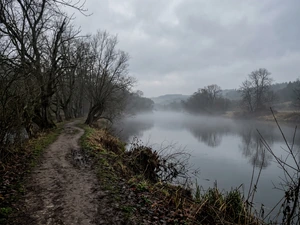
For more than four decades, a woman pulled from the Milwaukee River had no name. This month, the Milwaukee County Medical Examiner’s Office announced that advanced forensic genetic genealogy had finally identified her as Berline Trammel, born November 17, 1955.
An off-duty firefighter discovered her body floating in the river on March 16, 1982. Investigators at the time believed she may have been in the water for as long as three months before she was found, and despite their efforts, the technology and records available then were not enough to tell them who she was.
Decades Without an Answer
Trammel became one of the thousands of unidentified people whose cases sit open for years, sometimes generations. Her file stayed unsolved as detectives retired and the case grew cold. What kept it from disappearing entirely was the slow march of forensic science.
The breakthrough came through forensic genetic genealogy, the same approach that has cracked a string of long-dormant cases nationwide. Rather than searching only criminal DNA databases, investigators build family trees from genetic relatives and work inward toward an identity.
How Investigators Found Her
The identification was the product of a multi-agency effort that ran from 2022 through 2026, four years of analysis and follow-up. The Milwaukee County Medical Examiner’s Office, the Milwaukee Police Department, and the Wisconsin Department of Justice Division of Criminal Investigation worked together to trace Trammel’s biological relatives.
By building out a family tree and confirming the genetic links, they were able to put a name to the woman who had been known only as a Jane Doe for 44 years. Her family was notified and expressed gratitude for finally receiving an answer.
The work is painstaking by design. Investigators start from a partial genetic profile, identify distant cousins who have uploaded their own DNA to genealogy databases, and then trace the branches of a family tree downward until a single name fits the timeline and the place. In Trammel’s case, that process took four years of patient follow-up before the office could say with confidence who she was.
What the Science Did and Did Not Resolve
The identification answers who she was. It does not, on its own, explain how she died. After her body was examined in 1982, officials determined there were no signs of violence or injury, and her death was attributed to accidental drowning. The circumstances that led her into the river, however, remain unresolved.
That gap is common in these cases. Genetic genealogy is built to restore identity, not to reconstruct a final day. For Trammel, the science returned her name to her and connected her back to a family. The questions about that night in late 1981 or early 1982 stay open.
A Method Rewriting Old Files
Forensic genetic genealogy has changed what a cold case can be. For decades, an unidentified body without a database match was effectively a dead end. The newer approach uses genealogy databases to find distant relatives, then narrows the search through family trees until a name emerges. It has resolved cases that sat untouched for thirty, forty, even fifty years.
Trammel’s identification fits that wave. The work spanned 2022 to 2026 and required coordination across a medical examiner’s office, a police department, and a state criminal-investigation division. The timeline shows the method is not instant; it is meticulous, and it depends on relatives existing in the right databases.
Why It Still Matters
There is no suspect here and no charge, only a name returned after 44 years. For the family, that is the heart of it. An identification ends a specific kind of limbo, the not-knowing that has no statute of limitations and no natural end. The 1982 finding of accidental drowning still stands, and the identification does not reopen it or suggest a crime.
Cases like Trammel’s are why agencies keep submitting decades-old samples for new testing. A woman spent 44 years known only as a Jane Doe, and now she is Berline Trammel, born in 1955, connected again to the relatives who can claim her. For the investigators who kept the file alive, that answer is the entire point of the work.
References: Milwaukee cold case solved after more than 40 years through DNA technology | 1982 Milwaukee River cold case medical examiner identifies woman

The Topline News team was assisted by generative AI technology in creating this content
Trending

Earn Massive Cash Back With This Card
Sponsored
Texas Woman Used Instagram to Lure Teens to Their Deaths
Alex Morgan

The Dumb Money Mistake Most People Make
Sponsored
Chrisley Family Daughter Booked, Released Hours Later
Jordan Reyes

These 14 Benefits Could Save Seniors Thousands
Sponsored

Packers' Josh Jacobs Arrested on Abuse Charge
Taylor Bennett
Mom Sends $5,400 to Cartel After Hearing Daughter's Voice
Jordan Reyes
Man Stopped at Airport With Explosive in Carry-On Bag
Alex Morgan
Trucker Vanishes at I-95 Rest Stop, Found Dead
Alex Morgan

Carnival Passengers Charged After Guest Services Brawl
Dana Whitfield

Actor Sentenced to 32 Years to Life in Stabbing Case
Taylor Bennett
Nancy Guthrie Missing 122 Days as FBI Investigation Continues
Taylor Bennett
Busfield's Wife Speaks as Child Abuse Trial Looms
Taylor Bennett

Grandparent Scam Tricks NJ Woman; Uber Used as Courier
Jordan Reyes
Ex-NBA Guard Terry Rozier Hit With New Bribery Charges
Jordan Reyes
AI 'Girlfriends' Stole $15M From U.S. Seniors
Jordan Reyes

Tourist Beaten and Robbed in Barbados; 9 Charged
Dana Whitfield

Passenger Dies After Climbing Over Stateroom Balcony at Sea
Alex Morgan
Missing Carson City Girl Found Safe; Suspect Arrested
Taylor Bennett
Remains Found in 1978 Identified as Missing Veteran
Dana Whitfield

Amber Alert Girl, 5, Found Safe; Father Arrested
Taylor Bennett
'We Got Him': Son Waits 33 Years for His Mother's Killer
Dana Whitfield

'Bail Bondsman' Scam Hit Seniors; 32 Now Charged
Alex Morgan

Canadian Gets 33 Years for Targeting 145 U.S. Children
Jordan Reyes