
Living Skin on Robots? Scientists Take a Creepy Step Forward
By Nikki Thrace. Mar 4, 2025
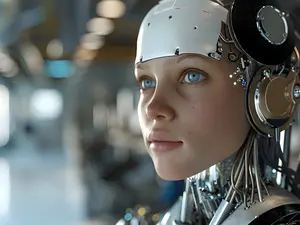
Imagine a robot that doesn’t just mimic human expressions but actually “wears” living skin that moves and stretches like yours. That reality just took a step closer with a breakthrough from researchers at the University of Tokyo. Using engineered human skin tissue, scientists have successfully created a robotic face that can smile, raising profound questions about the future of human-robot interaction.
The Science Behind the Living Skin
Traditional robotic faces have long struggled to replicate natural human expressions convincingly. Silicone skins can mimic the look of human faces, but they lack flexibility, realism, and the ability to heal. That’s where the University of Tokyo’s research stands apart.
Their team engineered living skin using human dermal fibroblasts - cells responsible for producing connective tissue - and applied it over a robotic face. This wasn’t as simple as layering human tissue onto a machine; the researchers had to find a way to bond it securely while allowing it to move without tearing.
Enter perforation-type anchors. Inspired by the ligaments that attach human skin to muscle and bone, these tiny V-shaped perforations help the skin grip the robot’s surface. A collagen gel, rich in human cells, seeps into these perforations, ensuring a firm bond while maintaining flexibility. The result? A robotic face that can not only hold skin but move in ways that look eerily natural.
To further enhance its durability, researchers are exploring ways to improve the adhesion of skin to robotic structures. The use of plasma treatment has proven effective in helping the collagen gel penetrate deeply into the anchor sites, creating a stronger connection between the robotic surface and the biological material.
Why a Smiling Robot Matters
You might be wondering: why invest so much effort into making a robot smile? The answer lies in human psychology. Facial expressions are a crucial part of communication. A robot that can produce subtle, natural movements may be better suited for roles in healthcare, customer service, and even companionship.
For example, in elder care, robots that can express emotions more naturally could provide comfort and a sense of connection to patients. Likewise, in customer-facing roles, robots with realistic facial expressions might be less intimidating and more engaging.
Beyond robotics, this technology has implications for the cosmetics and plastic surgery industries. The same skin-anchoring technique could help create more realistic and durable synthetic skin for medical applications, from burn victims to reconstructive surgery.
Additionally, robots equipped with living skin could serve as models for dermatological research, offering a new way to test skincare products, anti-aging treatments, and even wound-healing techniques without the need for human test subjects.
The Future of Biohybrid Robotics
The researchers aren’t stopping at a smiling face. Their next goal is to make the skin even more humanlike by adding wrinkles, pores, and a thicker epidermis. The long-term vision includes embedding sweat glands, blood vessels, and even nerves, enabling robots to “feel” touch and self-heal minor wounds.
But perhaps the most ambitious step is integrating muscle tissue. Current robotic faces rely on actuators (mechanical components) to produce movement. Future iterations may use biological muscle tissue grown in the lab, allowing for even more natural motion.
Another potential advancement involves the inclusion of sensors within the skin to allow robots to detect temperature, pressure, and texture variations, further enhancing their ability to interact with the environment in a humanlike manner.
The Ethical and Psychological Implications
As robots become more lifelike, society faces new ethical dilemmas. At what point does a humanoid machine stop being a “tool” and start being perceived as something more? If robots can mimic human emotions convincingly, how does that affect our interactions with them?
Some experts worry about the “uncanny valley” effect - a phenomenon where robots that look almost human, but not quite, trigger feelings of discomfort. Will a robot that smiles like us, but doesn’t quite act like us, make human-robot interactions more awkward rather than more natural?
On the flip side, there’s the potential for positive impact. Robots with humanlike expressions could revolutionize therapy and mental health care, providing emotional support to those who might otherwise feel isolated.
As robots develop more lifelike features, there will also be concerns regarding consent, privacy, and data collection, particularly in industries where they interact closely with humans.
What Comes Next?
The development of biohybrid robots is still in its infancy, but the University of Tokyo’s work represents a major step forward. If researchers can continue refining this technology - making robots more expressive, self-healing, and possibly even sensitive to touch - we may soon be living in a world where machines don’t just work for us but connect with us in ways we never imagined.
With continued advancements, we may see robots equipped with self-repairing skin and realistic muscle movements that make them nearly indistinguishable from humans. This could open doors for roles in entertainment, social services, and even education.
Whether that excites or unsettles you, one thing is certain: the line between human and machine is getting blurrier by the day.
References: A Robot Gets a Face of Living ‘Skin’ That Allows It to Smile | Robots Face the Future | Perforation-Type Anchors Inspired by Skin Ligaments

The Topline News team was assisted by generative AI technology in creating this content
Trending

Earn Massive Cash Back With This Card
Sponsored

Texas Psychics Charged After Telling Victims a Curse Required a Corvette
Alex Morgan

The Dumb Money Mistake Most People Make
Sponsored

Georgia Couple Arrested for Murder After Bartender Found Dismembered in Reservoir
Dana Whitfield

These 14 Benefits Could Save Seniors Thousands
Sponsored

Actor From 'Top Gun: Maverick' Killed at Home - Arrest Made
Taylor Bennett

Missing Royal Caribbean Crew Member Found Dead in St. Kitts
Dana Whitfield

Mail Carrier Killed Months After Losing Her Husband
Taylor Bennett

James Harden Pulled Over at 3 A.M., Booked by Dawn
Taylor Bennett

Cold Case Investigator Says Marilyn Monroe's Death Scene Was 'Too Pristine'
Jordan Reyes

Teens Paid to Shoot and Film It. A Veteran Cop Was Killed Trying to Stop Them.
Jordan Reyes
Actor From 'Elf' and 'Friday' Arrested After Missing Child Support Hearing
Jordan Reyes

Nicole Brown Simpson Said 'I'd Rather Die' - Her Ex Finally Speaks
Dana Whitfield
Psychotherapist, New Mom, Stabbed to Death at Home
Dana Whitfield

Pastor Dies Hours Before Facing Wife's Murder Charge
Jordan Reyes

They Planned Drone Bombs Over the Crowd. A Teenager's Mother Called the FBI.
Dana Whitfield

Jury Rejects Self-Defense, Sends Teen to Prison 35 Years for Track Meet Killing
Taylor Bennett

IRS Agent Gets Life in Prison After Double Murder Plot With Family's Nanny
Alex Morgan
'Get Him Out of Here' - Judge Orders Gilgo Beach Killer Removed After Families Speak
Alex Morgan

Husband Sentenced to Life in Au Pair Murder Case
Taylor Bennett

Three Women Charged in Daylight Murder of Young Mom
Alex Morgan

Alex Murdaugh's Murder Convictions Are Gone - He Is Still in Prison
Jordan Reyes

Mom's Birthday Text Came Hours Before Daughter Killed Her
Jordan Reyes

Mark Sanchez Stabbed 4 Times - Now Faces Prison
Alex Morgan